

How did the Education Manifesto come to life?
Disclaimer:
Much has been said about the topic of education. There is a current divide between “us” and “them”. However, I do not believe that governments (“they”) want to keep us “in the dark” or dumb. I do not believe that there is a malicious intent to manipulate the masses through lack of education in order to control us better. Call me naïve, I might be. But it is my belief that changing the education systems is such a huge piece of work, which involves so many variables, that it makes it almost impossible to achieve. “They” don’t want to keep us uneducated. “They” just don’t know how to go about it. At least this is what I believe. And I will dedicate the rest of my life to facilitate a reform in education, by gathering the experts who will help create a living curriculum that can be adopted in any country – education is, in the end, universal! – and translating big changes into manageable laser focused actions.
How did I get here?
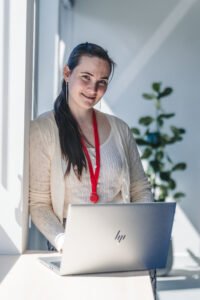
Hello, I am Diana and I am 37 years old. I am a Romanian-Belgian citizen, living in Belgium and working as functional analyst for a public social security institution. I find that my identity is irrelevant for the purpose of this manifesto which supports a universal cause. But if I were you, the reader, I would also like to know who was behind an initiative I am about to embark upon.
So here we go: while I was in high school and then university, I really thought that studying hard would prepare me well for life. I was told that having high grades and degrees at reputable universities would ensure I succeed in life. But what does that even mean? A good job? A good salary? It wasn’t until I was applying for my first job that I started to realise there can be a distinction between what I am good at and what job I would love to do. Very rarely the two match. I, myself, was among the lucky ones, because I truly follow my intuition and my heart, so I only chose jobs that I loved to do. And during my first professional years, I realised I was surrounded by so many people who worked just to pay the bills.
The idealist that I am, I have always been involved in volunteering activities. From coordinating volunteers for an online NGO having the mission to bring ICT to grassroots in Africa, to coordinating volunteers involved in a legislative initiative aiming to grant nature legal rights. It was during those activities with the Rights of Nature organisation that I had the insight that people cannot “respect nature” and “feel one with nature” if they don’t feel one with themselves and their soul first. If they have wounds which go deep. If they lost or never had been in touch with their North Star – meaning that inner voice which whispers and makes one feel that they are on the right track – where everything feels aligned, and even when it isn’t, it just makes sense in the bigger picture of things. Where challenges seem the perfect context for growth. And that is when the initiative “Soul Circles” was born. The first such event took place in 2015 and it was focused on the connection to the womb. It was an informal event where I invited my friends to share what I had read and experienced about this topic. I just wanted to spread the word. I even had a crazy idea, to go on a world tour and hand in one book to every woman I cross paths with. The book was “The Optimized Woman”, by Miranda Gray. However, the reality hit: I couldn’t afford such an endeavour, so I decided to spread the word just living my life every day. I continued to organise quite a few such events, focused on different topics, such as the connection to one’s soul, emotional literacy, financial management, the feminine-masculine dynamics and so on. I chewed for a decade what would be the best way to share with the world what I struggled to learn, through reading, hurting, healing, journaling and thinking “why didn’t we read this in school?!”. There currently are so many books about which I made such remark.
This is how, little by little, the idea to update education curriculum entered my mind. And in the meantime, I just shared the resources and information with those closer to me, one soul at a time. Their achieved results and expressed gratitude convinced me that this change in education is really needed. It is better to not fix the broken adults, but it is even better to not break the kids in the first place. To guide humans in a way which does not interfere with their becoming. Keep their spark alive, their creativity, curiosity and energy. For that, both the subjects and the ways of teaching them have to be updated with what we continuously discover, as a society, and adjusted to the new world we are living in.
The current education does not have a “done” vision
I will be the first to say that learning never ends, as long as we live. I loved studying (still do!) and I couldn’t choose one out of three faculties that I got admitted to: the Law University, the International Economic Relations Faculty and European/French Law. So I did them all! Well, the initial idea was to just do one semester, and then keep the one I liked the most. But after that first semester, I realised each was amazing in its own way and if I managed for one semester, I could continue the same way until the end.
I love learning, but I have to know for which end. And I trust there are many like me out there, who get demotivated because there is no end vision or end goal to which they consented and formally committed to, either when they entered school or when they started a certain subject at the beginning of the school year. There might be an enumeration of what will be taught, but there is no relatable link to their every day life or their intentions about their own life and the required skills to achieve those. From this pondering came out Actions 1 and 2 of this manifesto.
The first time I had the rhetoric that we live life without an end to our to-do list I was in my 30’s. I remember thinking that that kind of life leads to unfulfillment and burnout. It happened when I read in the book “Effortless” the chapter “What ‘done’ looks like”. Then I realised that my energy wasn’t put into doing what needed to be done until the vision that I chose was achieved. No, I gave my all every day, until I emptied myself, as if exhaustion was the only measure of being a serious person who succeeds in life. That is when I pondered about discipline. And I realised that discipline is not about pushing oneself to do something one doesn’t feel like doing. That is more like authoritarian behaviour. Discipline is choosing a goal, then setting an action plan for it and then executing it, even when we don’t feel like it! But THAT is different, because we chose the vision and we know what we choose to put our effort into. It is not something imposed from the outside.
In school, we don’t learn how to learn and we don’t learn how to discern and choose. We don’t get enough practice through trial, error, backtest and improved reiteration. We do not learn how to use our mistakes for anything else than to be bullied or ashamed. Yet school should be the best Life Lab where we can learn, without the weight of life responsibility on our shoulders.
This is why I deeply believe there needs to be an end goal to education. One which is embraced first and foremost by the students. This end goal should be supporting the transition to adulthood, as human beings well integrated in society, who live life intentionally, doing what they love and also consciously enabling the financial rewards coming from that. Adults who can create and maintain healthy relationships, both personal and professional, who have a good balance in their life between pleasure and duty. Adults who can be good reference models for the ones who come after them, so that when they are old, they are surrounded by youngsters who are keen to learn from them.
There are so many dropouts who are rather intelligent but no longer consider that school helps them or has anything meaningful to offer. And I dread the day when my own son, now eleven months old and eager to explore and read and play, will also fight me when I tell him he needs to go to school. He will ask me “WHY?”. And I want to be able to believe my own explanations about why school is important and how it will help him become.
Our motto is “Together for a better society, where intelligence, humanity and collaboration are at the center.” If you resonate with all this, please sign the manifesto. Let’s achieve this goal together, one voice at a time!
With hope,
Diana
If you have any questions or comments about any of the points made above, please use the comments section below or drop an email at info@education-manifesto.org.
Hello, Education is a truly important thing in a human’s life.