

When I was little, my dad always used to say, when we were driving past a sheep flock, that if we don’t study well, my brother and I will end up being a shepherd. I took it as a joke, because I had good grades and didn’t feel in danger of becoming one, but now, looking back at that statement and being a parent myself, I realise all the worries and wisdom he wanted to pass on through that ‘joke’. And of course there are also good, happy and fulfilled shepherds who may have chosen that life path, from generation to generation. But this article is not about them. It is about what makes the difference between a good life and a bad life.
We could debate for a long time about the fact that ‘good’ and ‘bad’ are labels and are abstract and, in the end, also purely subjective. But let me tell you my take on it. In my mind, a ‘good life’ is a life in which you consciously choose your personal and professional path(s), you give yourself the means and skills to succeed and you also have the time, space and capacity to celebrate and rejoice what you are building along the way. On the other hand, a ‘bad life’ is what you revert to when you don’t know or cannot do better and this plan B makes you feel unfulfilled. It keeps you away from your dreams and desires, but you either don’t know what keeps you blocked or you can’t overcome the blockers. And the gap between the two lies, in my view, in the education. (disclaimer: I am not speaking about the cases of poverty or other family or life challenges which may make such choice impossible).
If you are new to this website, you might not know what I mean by ‘education’. For me, education goes beyond the subjects that we learn in school. Besides the competencies related to the careers we choose, education should provide the resources to get knowledge about ourselves (personal and spiritual development), skills in relating, emotional literacy, practice for financial management and knowledge about our body, sport and nutrition. All this might not belong to schools and maybe schools themselves, as they are set today, are no longer fully suitable for the society we live in. If you want to understand more about my last statement, I invite you over here. I could have never written a more thorough list and description of all the concerns related to today’s schools and today’s education like Mantvydas did, backing it up with more than 10 years of research and, of course, with his own experience through life. Through weeks of exchanges, we realised how much our life experiences related to education resonated, even if we grew up in different countries. And we believe we are not the only ones to feel so.
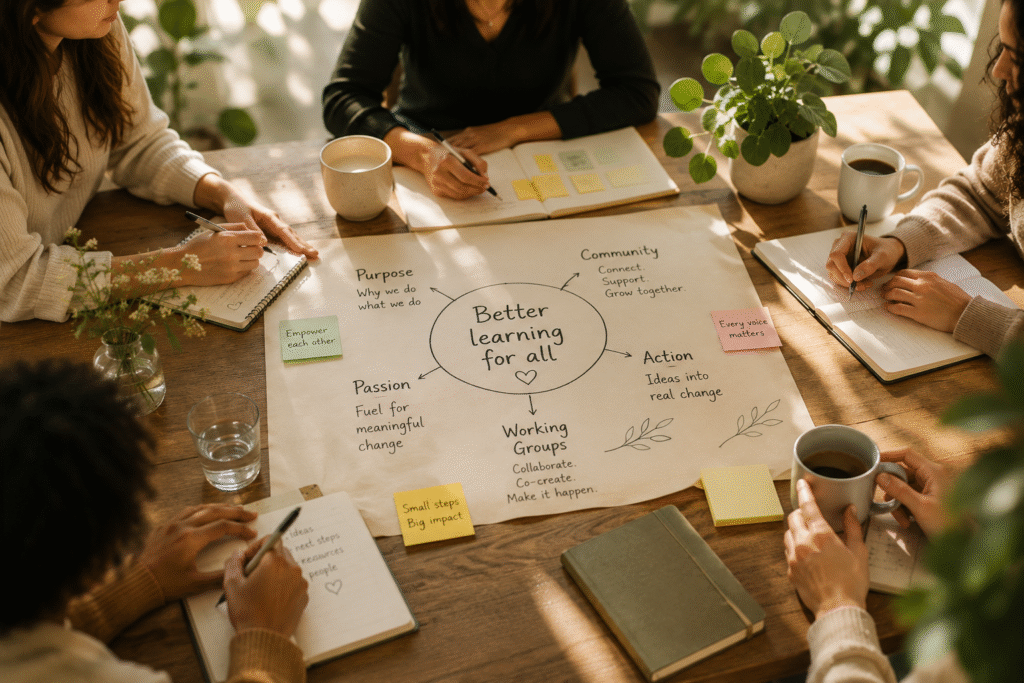
Without knowing about each other, Mantvydas and I created an Education Manifesto. We found each other through the big web and we realised how similar our views are, as well as our conclusions about the issues of today’s education. Moved by a deep passion about the topic and a substantial motivation to do something about it, we decided to join forces and create The Learning Movement. A Movement to discuss about the structural problems of today’s education, as well as the possible alternatives and factors which could enable a better learning experience and outcome for each of us and generations to come. If all this resonates with you and you want to be part of the movement, sign up here! You will then be updated through regular newsletters about its progress and find out when we launch our discussion forum and other activities in which you could participate to advance the movement.
Education is one of the very few things that connects all of us. Every single person has gone through the education system in one way or another, and every single person has learned. That makes this conversation universal. Looking forward to have you join our movement!
With passion,
Diana
Read more about the Seven Actions Plan and the Doctrinai platform, a platform about reclaiming learning as something personal, dynamic, and self-directed.